
What Is Tesamorelin?
What Is Tesamorelin? A Complete Guide to This Peptide and Its Role in Visceral Fat
Tesamorelin is one of the most extensively studied peptides in metabolic medicine and endocrinology. Although many people have begun to hear about it because of its possible relationship to body composition and the reduction of abdominal fat, it is important to understand what it really is, how it works, and what its approved indication is.
In this article, we will review the available scientific evidence, its mechanism of action, and the research that has sparked the interest of physicians and scientists around the world.
What is tesamorelin?
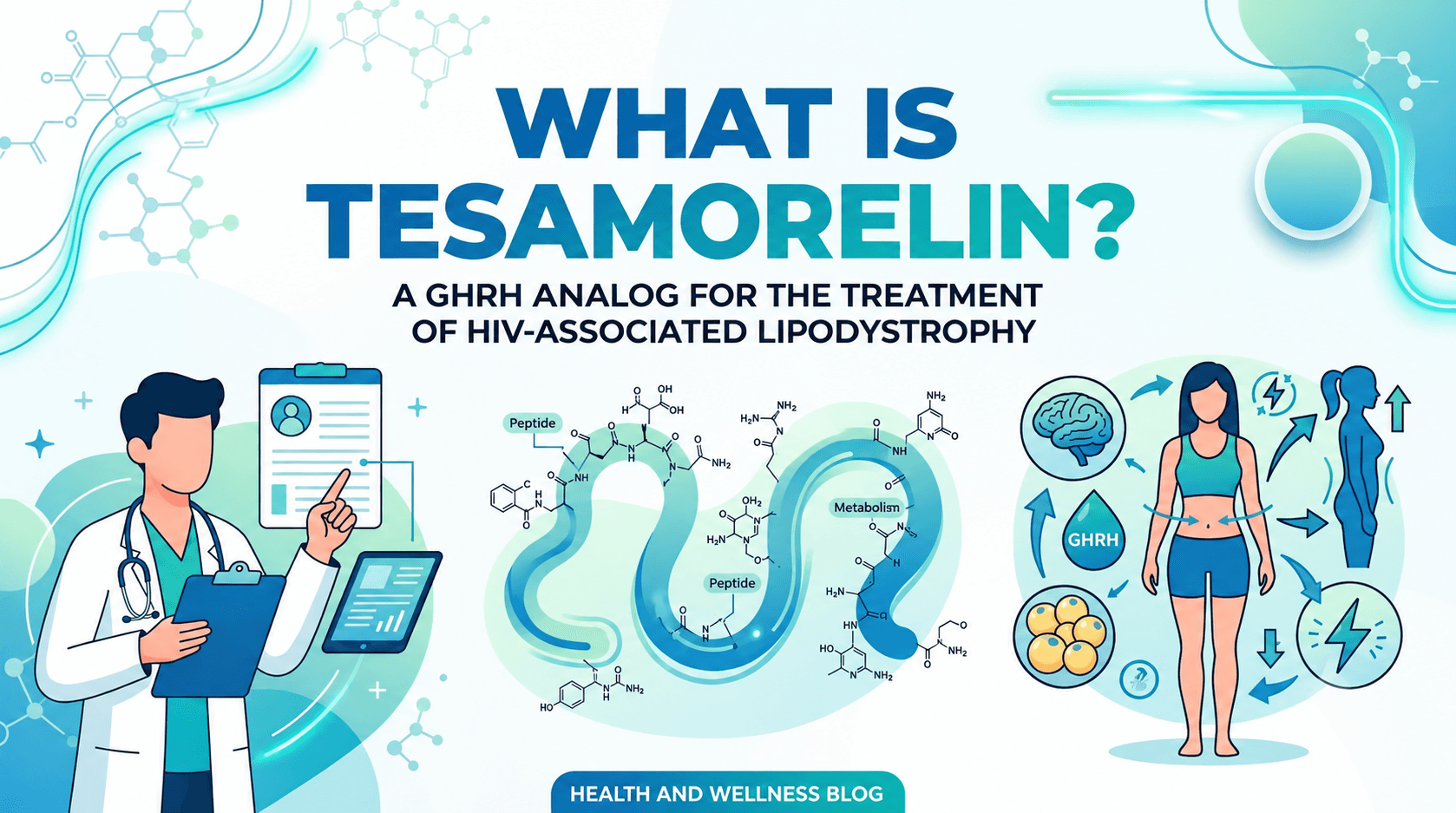
Tesamorelin is a synthetic peptide that acts as an analog of growth hormone-releasing hormone (GHRH). In other words, it stimulates the pituitary gland to produce and release growth hormone (GH) physiologically.
Unlike direct administration of growth hormone, tesamorelin uses the body’s own endocrine system to stimulate natural GH production.
As a result, it also increases the production of IGF-1 (insulin-like growth factor 1), a protein involved in multiple processes related to metabolism, body composition, and tissue maintenance.
What is tesamorelin approved for?
Currently, the U.S. Food and Drug Administration (FDA) has approved tesamorelin for a very specific use:
To reduce excess abdominal visceral fat in adults with HIV infection who have lipodystrophy associated with antiretroviral treatment.
This approval is based on clinical studies that showed a significant reduction in visceral adipose tissue in this population.
It is important to note that this is the only indication officially approved by the FDA.
What is visceral fat?
Not all body fat is the same.
Subcutaneous fat is found beneath the skin and is the fat we can pinch.
Visceral fat, on the other hand, surrounds organs such as:
- Liver
- Pancreas
- Intestines
- Kidneys
Various studies have linked excess visceral fat to a higher risk of:
- Insulin resistance
- Type 2 diabetes
- High blood pressure
- Dyslipidemia
- Cardiovascular disease
- Fatty liver disease
- Chronic inflammation
For this reason, reducing visceral fat is considered an important goal in metabolic health.
How does tesamorelin work?
Tesamorelin binds to GHRH receptors located in the pituitary gland.
This causes the physiological release of growth hormone.
It subsequently increases the production of IGF-1 in the liver.
This process may promote:
- Greater use of fat as an energy source.
- Reduced visceral adipose tissue.
- Preservation of muscle mass.
- Improved body composition.
By stimulating natural GH production, it maintains the body’s physiological secretion pattern, which distinguishes it from the use of exogenous growth hormone.
What is the difference between tesamorelin and growth hormone?
This is one of the most frequently asked questions.
Growth hormone involves administering GH directly.
Tesamorelin, on the other hand, does not provide growth hormone.
Instead, it stimulates the pituitary gland so the body itself produces GH.
This means the endocrine system retains some of its normal regulatory mechanisms.
What is the difference between tesamorelin and GLP-1 medications?
Medications such as semaglutide or tirzepatide primarily help by decreasing appetite, delaying gastric emptying, and promoting lower caloric intake.
Tesamorelin works through a completely different mechanism.
Its primary objective is to stimulate the physiological production of growth hormone, which influences metabolism and body-fat distribution.
For that reason, the two therapies belong to completely different categories and should not be considered equivalent.
Why has it generated so much interest?
Although the FDA has approved its use only for people with HIV and lipodystrophy, researchers continue to study tesamorelin because of its mechanism of action.
There is currently research exploring its possible role in different areas related to:
- Body composition.
- Healthy aging.
- Metabolic function.
- Visceral fat accumulation.
- Liver health.
- Cardiometabolic risk.
These studies seek to better understand which patients could benefit and under what circumstances, but many of these applications remain under investigation or correspond to off-label uses when a physician considers them appropriate for a specific case.
What potential benefits have been studied?
Depending on the population studied, research has evaluated effects such as:
- Reduction of visceral fat.
- Improved body composition.
- Preservation of lean muscle mass.
- Physiological increase in growth hormone.
- Increased IGF-1.
- Possible improvements in certain metabolic markers.
- Possible benefits for liver fat accumulation in certain populations.
It is important to remember that results may vary among individuals and that not all of these effects are approved indications.
How is it administered?
Tesamorelin is generally administered by subcutaneous injection.
Treatment must always be prescribed and supervised by a healthcare professional experienced in metabolic medicine and endocrinology.
It should never be used without prior medical evaluation.
Does it have side effects?
Like any medication, tesamorelin can cause adverse effects.
The most commonly reported include:
- Redness at the injection site.
- Mild swelling.
- Fluid retention.
- Muscle pain.
- Joint pain.
- Tingling in the hands or feet.
- Headache.
- Changes in glucose levels in some patients.
Any significant symptom should be discussed with the treating physician immediately.
Who should not use it?
Tesamorelin may not be appropriate for everyone.
The decision to use this medication depends on multiple clinical factors, medical history, and professional assessment.
Treatment should always be individualized.
Frequently asked questions
Does tesamorelin burn fat?
Available evidence shows that it can reduce visceral fat in the population for which it was approved. Its effect should not be interpreted as that of a general “fat burner.”
Does it cause significant weight loss?
Reducing body weight is not tesamorelin’s primary objective. Its main studied effect has been on the distribution of body fat, especially visceral fat.
Can it replace a healthy diet?
No. No medication replaces a balanced diet, regular physical activity, adequate sleep, and a healthy lifestyle.
Can it be combined with exercise?
Exercise remains one of the most important tools for improving body composition and metabolic health. Any treatment should be part of a comprehensive plan supervised by a healthcare professional.
Conclusion
Tesamorelin is one of the peptides with the strongest scientific support in the field of metabolic endocrinology. Its FDA-approved indication is to reduce abdominal visceral fat in adults with HIV and lipodystrophy associated with antiretroviral treatment. At the same time, its mechanism of action has sparked growing interest in research on body composition, metabolism, and healthy aging.
As science advances, new studies will likely continue to emerge to help better understand its clinical potential. In the meantime, any decision related to its use should be made on an individualized basis and under the supervision of a healthcare professional.
At Casa de Péptidos, we believe that evidence-based education is the first step toward making informed decisions about health, research, and wellness.


